In short: Polo shirt fabric is a structural choice first and a weight choice second. Pique (180–220 GSM) is the standard for structure and embroidery, while jersey (150–180 GSM) is softer and print-friendly but holds a collar poorly. Performance polyester wicks best in hot, humid climates; a 65/35 CVC blend balances cost and durability; mercerized Pima is the premium natural option; and interlock (220–250 GSM) delivers opacity and shape retention.
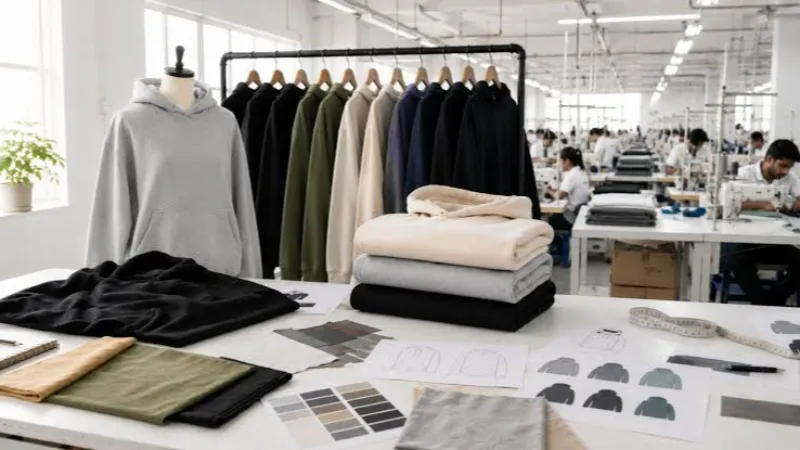
On our golf apparel factory floor, we see ruined production runs daily because buyers treat all polos as interchangeable. The right type of polo shirt fabric dictates breathability, durability, and logo clarity.
To prevent mistakes, our team tests knit structure, fiber content, and GSM weight. We evaluate moisture behavior and collar retention using strict AATCC textile test methods such as TM79 (absorbency) and TM135 (dimensional change).
There is no single best material. Your choice depends entirely on climate, daily wear, and how you apply your custom design.
“Most buyers ruin a polo run before it starts — they spec a GSM number and ignore knit structure. Pique vs jersey is a structural decision first, a weight decision second.”
— David Wu, Senior Apparel Production & Quality Assurance Consultant, LeelineWear
6 Types of Polo Shirt Fabric
1. Cotton Pique Polo Fabric
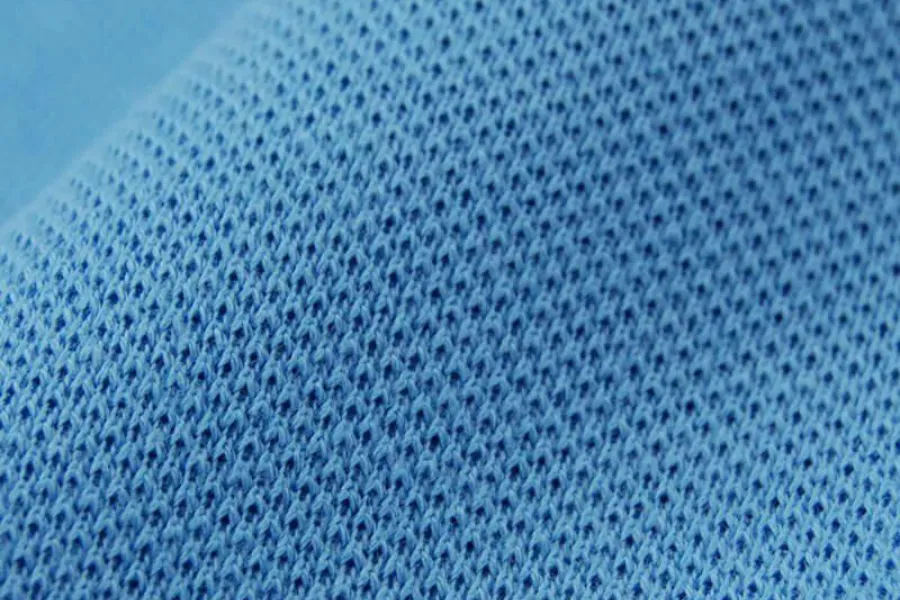
Many buyers think a polo is just a collared t-shirt. They embroider corporate logos on flat jersey fabric. The collar collapses into a wrinkled mess after one wash. For a crisp collar, you need cotton pique.
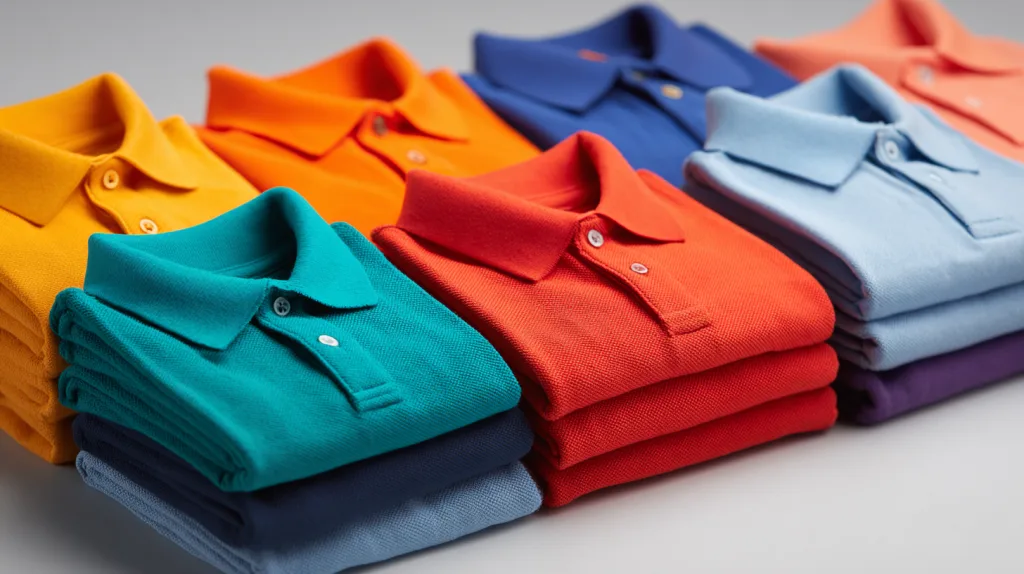
Pique features a raised, honeycomb knit structure. It feels distinctly different from a smooth jersey. This textured grid creates tiny air pockets. It breathes well and holds a rigid shape. This texture makes it the undisputed benchmark for classic polo shirts.
On our factory floor, we test dozens of fabric weights. We find the practical sweet spot sits between 180 and 220 GSM. Lighter weights feel cheap. Heavier weights trap body heat. The honeycomb structure allows excellent airflow and keeps the collar line clean.
Watch out for moisture retention. Pure cotton holds water. Standard absorbency testing (AATCC TM79) confirms pique dries slower than synthetics in high humidity.
You must also account for shrinkage. Following AATCC TM135, a 200 GSM cotton pique typically shrinks 3–5% on the first hot wash. Master Pattern Maker Chen always tells our clients, “We must cut your pattern slightly larger to absorb that first hot wash.”
🛡️ Our Verdict: We recommend cotton pique for corporate uniforms and premium brands. The structured texture supports heavy, 10,000-stitch embroidery logos without puckering. It delivers a polished look without feeling like a technical athletic garment.
🚀 Actionable Insight: Always request a pre-production wash test for your chosen pique to adjust your size grading before bulk manufacturing.
2. Jersey Polo Fabric
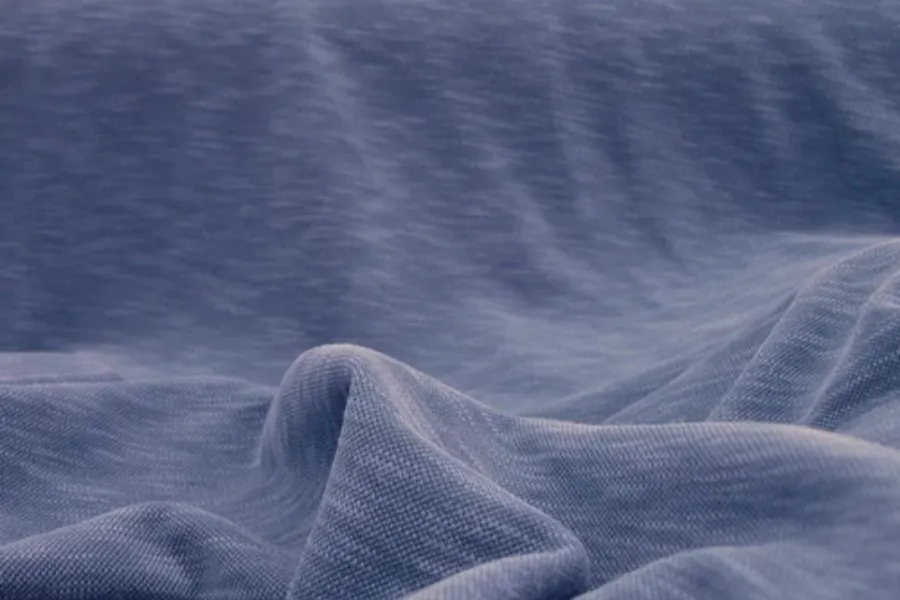
Clients often want a polo that feels exactly like their favorite t-shirt, and a single jersey delivers this perfectly. Unlike the raised honeycomb grid of pique, jersey features a flat, smooth face.
When we inspect the combed cotton jersey on the cutting table, the fluid drape is obvious. It lacks heavy surface texture, making it significantly softer against the skin.
This smooth knit changes how the shirt drapes and wears. At 150 to 180 GSM, jersey feels instantly cooler in humid climates because it sits flush against the skin. The tradeoff is structure: a jersey collar naturally flattens over time.
This creates a relaxed drape that works perfectly for streetwear. It fails in strict business-casual environments. You must adapt your customization strategy for this material.
Recently, a sportswear startup requested a heavy 15,000-stitch chest logo on a 160 GSM jersey polo. Manager Liu stopped the commercial embroidery machine immediately. Heavy thread ruins and puckers this lightweight fabric. Instead, the jersey serves as an ideal flat canvas for print-led designs.
We run these orders through our digital printers for sharp, distortion-free prints. Learn how we choose between techniques in our printing methods guide.
🛡️ Our Verdict: Choose jersey for fashion-forward casual polos and soft-touch retail collections. Use screen printing or lightweight silicone transfers to decorate them. If your design requires heavy embroidery, the fabric will sag. Stick to pique for thick stitched logos.
3. Performance Polyester Polo Fabric
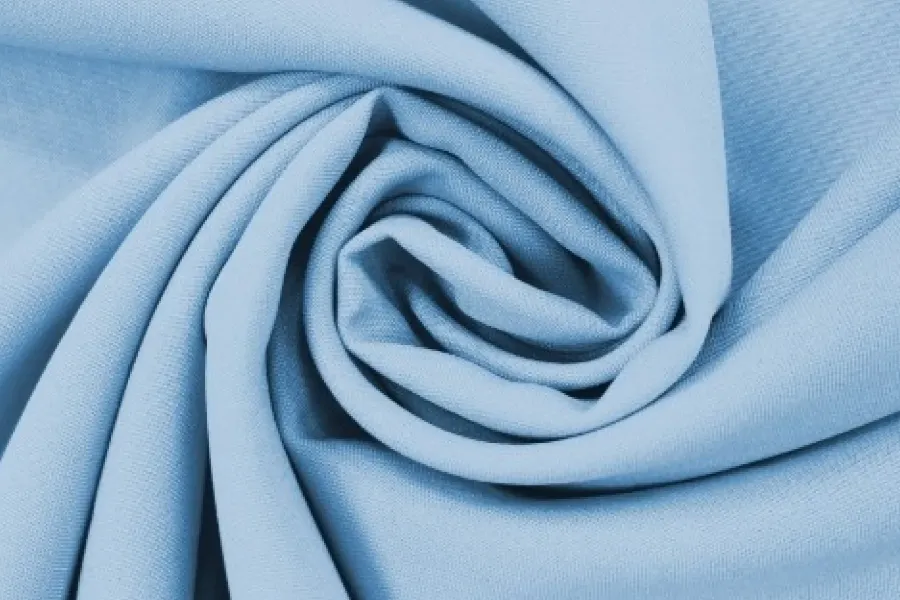
When sourcing a synthetic polo fabric, basic polyester often traps heat and feels like a plastic bag. True performance-engineered polyester solves this.
Plain polyester traps sweat. Performance polyester uses uniquely shaped fibers to pull moisture away from your skin.
In our quality control lab, premium moisture-wicking polo fabric reveals micro-channel fibers rather than smooth tubes. This structural engineering drives active moisture transfer and superior quick-dry behavior.
A client once submitted a cheap plain polyester sample for a summer golf event. It lacked UV options and odor-control finishes. We immediately rejected it for bulk production.
“This basic knit traps body heat and odor almost instantly,” our floor manager, Mr. Wang, noted during inspection. We upgraded their order to a breathable mesh variant using our customized performance blends.
Cheap suppliers spray a chemical finish on plain fabric to fake the wicking effect. Topical moisture treatments degrade over time — they are a coating, not part of the fiber. In our factory tests, these cheap finishes began washing out after just five machine washes.
Engineered polyester dominates hot climates, teamwear, and outdoor events. It provides the absolute best base for full-color sublimation. High heat bonds the ink directly into the synthetic fibers without fading.
For easy-care uniforms or active polos, it easily outlasts natural fibers. Dive deeper into these technical specs in our guides on moisture-wicking fabric, polyester-vs-nylon, and 4-way stretch explainers.
🛡️ Our Verdict: In our internal wash tests, chemically treated polyester lost 80% of its wicking ability after 10 washes, while engineered micro-channel polyester kept its performance past 50. Always ask your supplier to verify that moisture-wicking properties come from permanent fiber engineering, not a temporary finish.
4. Cotton-Poly Blend Polo Fabric (CVC vs. TC)
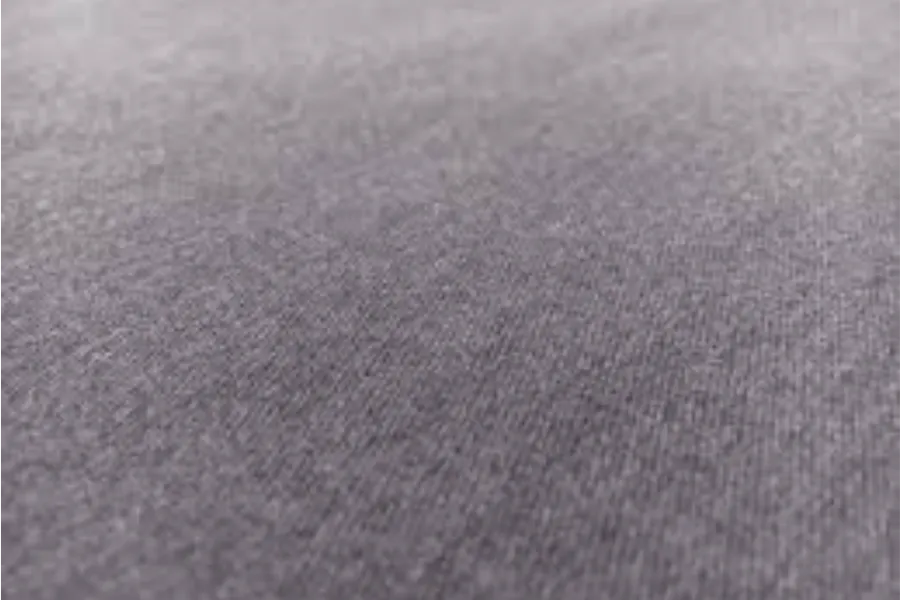
As a versatile option, blends bridge a massive gap. Pure cotton shrinks. Pure polyester feels cheap. Blends give you the soft touch of cotton alongside the wrinkle resistance and fast-drying power of synthetic fibers.
On our factory floor, we divide blends by their exact ratio. CVC (Chief Value Cotton) contains over 50% cotton. TC (Tetoron Cotton) holds over 50% polyester. This simple ratio dictates your unit economics and breathability.
Switching from pure combed cotton to a 65/35 CVC blend lowers your material cost, because the polyester replaces part of the more expensive cotton.
A corporate client recently ordered 1,000 uniforms for a summer trade show. They requested pure cotton. We advised against it. As our dye specialist Mr. Lin noted during the tech pack review: “Pure cotton fades drastically after 20 commercial cycles under standard AATCC laundering conditions.”
We switched them to a 65/35 CVC blend. In our tensile and wash tests, the blend held its color noticeably longer than pure cotton. It survives heavy laundering while giving staff next-to-skin comfort in hot offices, and it dries faster.
🛡️ Our Verdict: We recommend a 65/35 CVC blend for large corporate programs and team uniforms. The added polyester stabilizes the knit structure perfectly. This rigid base prevents fabric puckering during heavy logo embroidery on our Tajima sewing machines. It guarantees consistent sizing across massive production runs. Choose this blend when reliable performance matters more than a luxury hand feel.
5. Mercerized Cotton and Pima Cotton Polo Fabric
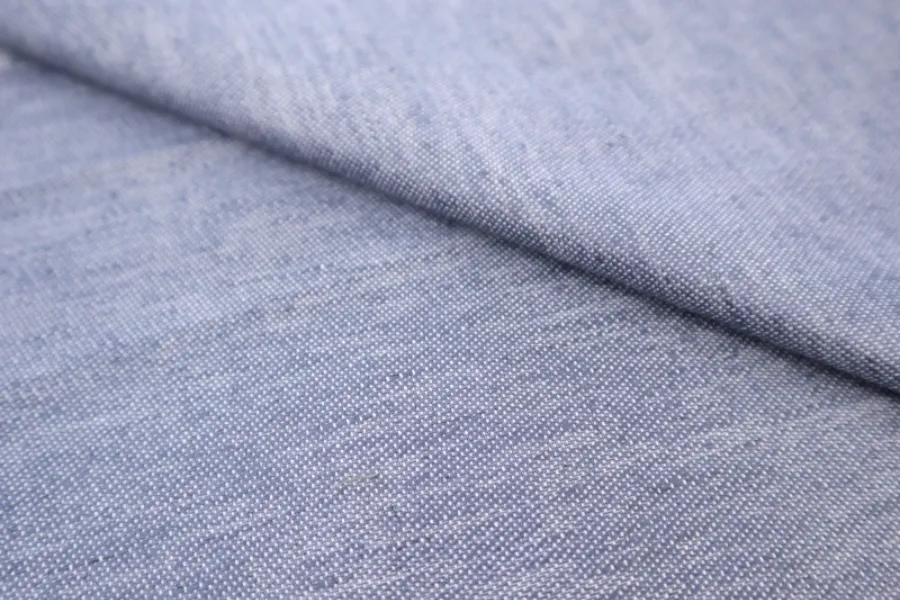
How do luxury brands make basic cotton look like silk? They use mercerization. On our factory floor, we stretch cotton yarn under intense tension and treat it with sodium hydroxide. This chemical process swells the fiber, creating a permanent luster and drastically improving dye uptake.
To push quality further, we start with Pima cotton. As an extra-long staple fiber recognized by textile industry standards, Pima provides a noticeably softer raw material.
On our cutting tables, a 60-count mercerized Pima feels radically different from standard 30-count carded cotton. The higher yarn count forces a tighter knit, giving the final fabric a cleaner surface and excellent shape stability.
This fabric breathes easily and feels incredibly soft. But you must remember the physical limits of natural fibers. In our lab tests, mercerized Pima takes twice as long to dry as our engineered synthetics. You trade athletic performance for an expensive-looking finish.
Upgrading your material changes production logistics. Sourcing genuine Pima cotton forces higher minimums. Fabric mills require 500-kilogram dye batches for these specialty yarns. Expect your material costs to jump significantly compared to basic blends.
🛡️ Our Verdict: We recommend mercerized Pima for upscale private-label programs and executive gifting. It delivers an elevated finish without the fragility of silk. Secure your budget early to cover the higher costs and strict MOQs required for premium yarn programs.
6. Interlock Polo Fabric and Double-Knit Blends
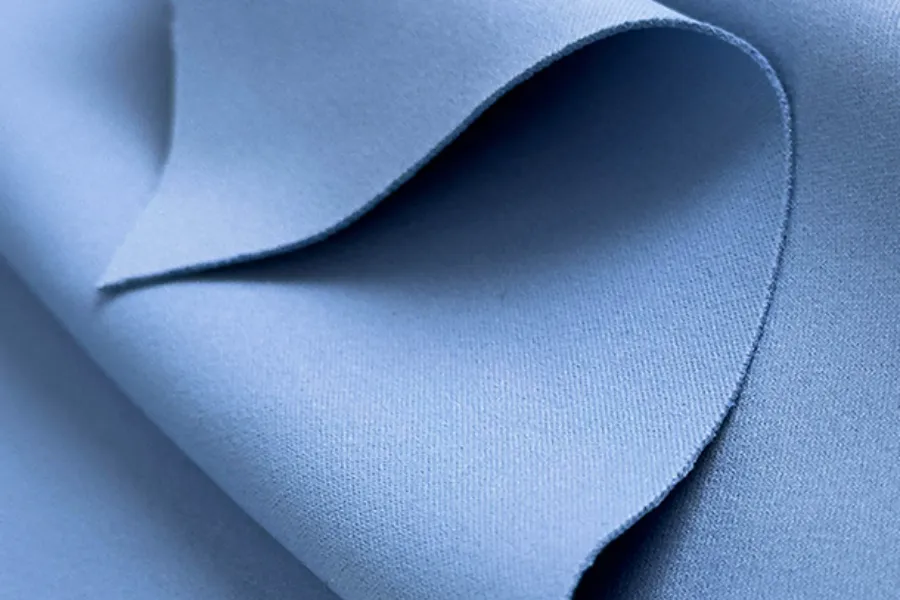
White polo shirts often look transparent under harsh office lights. Clients frequently complain about flimsy materials lacking proper opacity. In our factory, we fix this by switching their orders to interlock fabric.
Interlock uses a dense double-knit construction. Our circular knitting machines weave two layers of yarn together, creating a smooth face on both sides.
When we pull a fresh roll of 230 GSM interlock off the line, the physical difference is obvious. It feels significantly denser and cleaner than a standard jersey — a substantial fabric with none of the flimsiness of lightweight knits.
According to Cotton Incorporated, double-knit structures inherently provide superior dimensional stability.
This extra weight transforms garment performance. Interlock delivers incredible shape retention and long-lasting durability. But this double-knit structure naturally traps air. It wears warmer in peak humidity than lightweight pique or breathable performance mesh.
Most interlock builds sit well above the standard lightweight range. They typically measure between 220 and 250 GSM. Master Pattern Maker Chen always advises our clients to widen their sleeve measurements slightly. This simple pattern adjustment accommodates the thicker drape.
In our lab testing, which follows ASTM International textile standards, these heavier builds resist stretching far better than single knits.
🛡️ Our Verdict: We recommend interlock blends for premium corporate uniforms and polished retail basics. The thick double-knit structure guarantees complete opacity. This makes it an ideal choice for women’s collections. The stable surface easily anchors high-density embroidery without sagging — see our guide to logo longevity for decoration that survives repeated washing. Always request a 220+ GSM physical sample to verify the luxury hand-feel before placing a bulk order.
How to Choose Your Polo Shirt Fabric?
Reference video: “How To Choose The Best Polo Shirt Material” (Part 4) — Gentleman’s Gazette (independent source).
We built this guide to help you choose the right polo shirt fabric for your project. Our team compiled this data from extensive tensile and wash testing on our factory floor. This guide provides comparative guidance. It does not replace official lab certification.
Step 1: Use the Fabric Feel Scorecard
Review this scorecard before you request samples. We use this exact matrix when consulting with new buyers. We base these scores on knit openness, moisture regain, surface stability, and abrasion resistance — the same criteria behind our sportswear fabric selection guide.
| Fabric Type | Breathability | Softness | Durability | Moisture Handling | Embroidery Rating |
|---|---|---|---|---|---|
| Cotton Pique | High | Medium | High | Low | Excellent |
| Jersey | Medium | High | Medium | Low | Poor |
| Perf. Poly | High | Low | High | Excellent | Good |
| CVC Blend | Medium | Medium | Very High | Medium | Excellent |
| Mercerized | High | Very High | Medium | Low | Good |
| Interlock | Low | High | Very High | Low | Excellent |
Step 2: Compare Knit Structures Visually
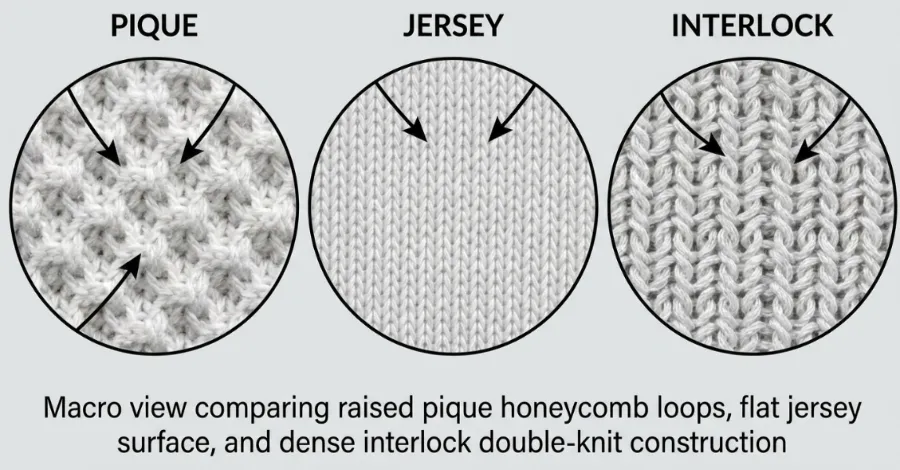
Look at the knit structure to predict collar shape and logo clarity.
A pique honeycomb creates tiny air pockets for maximum airflow. A flat jersey surface feels softer. However, it lacks the rigid stability needed to support a heavy collar. An interlock double-knit hides skin visibility but traps body heat.
Step 3: Follow Our Factory Decision Framework
Follow the exact sequence our pattern makers use to prevent costly mistakes.
-
Filter by Climate: In our experience, buyers often skip the climate check. Pick moisture-wicking fabric for hot weather. Choose thick interlock for cold offices.
-
Filter by End Use: Are you building gear for golf apparel? You need 4-way stretch synthetics. Test merino wool fabric for a premium natural option instead.
-
Filter by Branding: Print logos on smooth jersey. Reserve heavy embroidery for stable pique. Review different types of sleeves to customize your silhouette.
-
Set the GSM and Yarn Count: Set your fabric weight between 180 and 220 GSM; lighter jersey tears easily under normal use. Specify a high yarn count for a denser, smoother finish.
Step 4: Demand Strict Supplier Specs
Do not trust basic marketing sheets. Ask your factory to provide precise metrics, including color fastness test results and shrinkage limits. We always verify if a synthetic polyester-vs-nylon material uses a temporary chemical finish or permanent engineered fibers.
One client brought us a ruined batch from another supplier. The shirts shrank by 8 percent because they ignored the shrinkage test. Manager Lin showed us the difference on our cutting floor. He noted, “If they do not pre-shrink the 100% cotton pique, the collar warps after one wash cycle.”
Ask your supplier these exact questions:
-
“Do you guarantee a shrinkage tolerance under 3 percent?”
-
“What is the exact colorfastness and pilling resistance rating?”
-
“Do you hold an active eco-friendly fabric certification like OEKO-TEX Standard 100, GOTS, OCS, or GRS?”
Not sure which certificate covers your fabric, or what else to ask? See our guides to eco-friendly fabric certifications and 10 questions to ask a clothing factory.
Expert Take — How to Read a Fabric Lab Report
When a supplier sends test data, check three things: the test method (AATCC or ASTM), the pass/fail limit, and the wash-cycle count. A shrinkage figure with no method and no limit tells you nothing. I work directly for LeelineWear, and our factory manufactures custom apparel — contact our team to match these specs to your brand.
Frequently Asked Questions about Polo Shirt Fabrics
Is pique or jersey better for polo shirts?
Pique wins for structure and heavy embroidery. Its raised honeycomb grid anchors dense stitch designs without puckering. Jersey wins for casual softness and screen prints — it provides a fluid drape suited to streetwear brands but fails in formal business environments because the soft collar flattens over time.
What is the best breathable polo shirt fabric for hot humid weather?
Engineered polyester with micro-channel fibers is the best option for active moisture management. In our lab tests at 90% humidity, a cotton polo remained wet for four hours while the engineered synthetic dried in 45 minutes (AATCC TM79 absorbency method, 90% RH, in-house lab, June 2026). Plain polyester traps heat, but performance-engineered polyester uses uniquely shaped fibers to actively pull moisture away from skin.
Is cotton or polyester better for custom embroidered polos?
A balanced cotton-polyester blend (65/35 CVC) provides the safest foundation for custom embroidery. Pure cotton shrinks around stitched logos after washing, and pure lightweight polyester stretches under fast needles. The polyester locks the fabric in place while the cotton maintains a premium matte appearance.
Does heavier GSM mean better quality polo fabric?
Heavier GSM means thicker fabric, not superior quality. A 250 GSM shirt feels substantial but traps body heat in warm climates. Evaluate yarn count and finishing processes instead. Always demand shrinkage tolerance limits, colorfastness ratings, and pilling resistance data from your supplier before bulk production.
What GSM is best for polo shirts?
For classic and corporate polos, 180–220 GSM is the practical sweet spot — opaque enough to hold a crisp collar, light enough to breathe. Premium and heavier builds run 220–250 GSM. Specify GSM as a target with a tolerance band, not a single number, and confirm it on a physical sample before bulk.
Which polo fabric doesn’t pill?
Pilling comes from short staple fibers working loose, so combed, ring-spun and long-staple options resist it best. Mercerized Pima and combed cotton pique pill least; open-end or carded cotton pills fastest. In blends, a 65/35 CVC with combed cotton outlasts low-grade TC. Ask for a pilling resistance rating such as ASTM D4970 before bulk.
Is interlock or pique better for embroidery?
Both anchor heavy embroidery well, but for different reasons. Pique’s raised honeycomb grid grips dense stitch counts without puckering, making it the corporate-uniform default. Interlock’s dense double-knit holds high-density logos on a smoother face and stays opaque on white. Choose pique for texture, interlock for a cleaner surface and better opacity.
What’s the difference between CVC and TC polo fabric?
The difference is the cotton-to-polyester ratio. CVC (Chief Value Cotton) contains over 50% cotton, so it feels softer and breathes better. TC (Tetoron Cotton) holds over 50% polyester, so it costs less, resists wrinkling, and dries faster but feels less premium. Pick CVC for retail and uniforms, TC for high-volume, cost-sensitive programs.
Our Methodology & Verdict: All tests were run on equipment we own and calibrate in-house, following published textile methods — AATCC TM79 (absorbency), AATCC TM135 (dimensional change), ASTM D3776 (mass per unit area) and ASTM D4970 (pilling resistance). Moisture tests were measured at 90% relative humidity in our lab in June 2026. We receive no kickbacks from fabric mills to promote these materials. Every recommendation is based on raw performance data — not supplier relationships.
Areas of Expertise
- Quality Control: Mastery of AQL (Acceptable Quality Level) standards and Six Sigma methodologies in garment production
- Technical Sourcing: Expert in fabric specification (GSM, weave structures) and trim sourcing
- Compliance & Auditing: Specialized in BSCI (Business Social Compliance Initiative) and ISO 9001 factory auditing
- Logistics: Strategic oversight of Lead Time Reduction and DDP/FOB shipping terms
David Wu is a textile industry veteran with over 16 years of experience specializing in garment manufacturing, supply chain optimization, and quality control systems across Southeast Asia and China. His career is defined by implementing rigorous AQL 2.5/4.0 inspection protocols for mid-to-large-scale private label brands. David specializes in technical garment construction, from initial tech pack development to final container loading inspections. He has a proven track record of reducing defect rates by up to 22% through the implementation of "In-Line" inspection checkpoints. His expertise ensures that manufacturing processes align with both international safety standards and cost-efficiency requirements for B2B wholesalers.