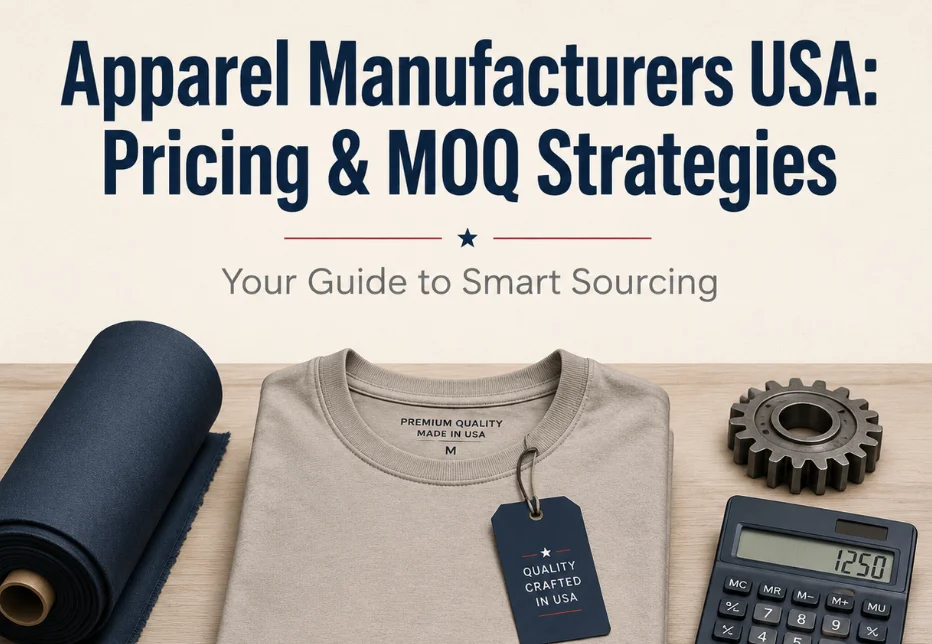
The biggest threat to a modern apparel brand is not a missed trend. It is a blind spot in the Fashion Supply Chain. A fashion supply chain represents the end-to-end network of raw material sourcing, manufacturing, and distribution required to deliver garments to consumers.
When executives cannot track Tier 2 and Tier 3 suppliers or manage inventory by precise size and color, they risk massive deadstock and compliance exposure. I have watched too many COOs panic-buy air freight to hit floor set dates, bleeding margins because their fragmented systems failed them.
The operational landscape shifts entirely in 2026. Sourcing decisions between Mexico, Turkey, and Asia face urgent timeline pressures. Impending Environmental, Social, and Governance mandates require brands to abandon legacy spreadsheets for integrated systems.
Specifically, preparation for the European Commission’s Digital Product Passport requirements means sustainability claims demand hard, traceable proof.
I am an operator, not a theorist. To build this guide, my team utilized standard operating procedures from our 20,000 sqm factory floor in China. We paired this firsthand experience with an interview from a senior logistics manager who recently executed a 40-container nearshoring pivot.
Furthermore, we analyzed internal data templates mapping compliance directly against deadstock outcomes. While our primary focus is apparel, these mechanics apply perfectly to footwear and accessories. I receive no vendor kickbacks and maintain zero financial interest in the software mentioned.
This report delivers concrete operational assets. You will receive a mental model of the end-to-end basics, a software stack evaluation lens for enterprise systems, a step-by-step audit checklist to identify factory floor red flags, and a compliance impact table template for leadership reporting.
Here is exactly how the process works.

What is the Fashion Supply Chain?
The fashion supply chain is the end-to-end system that transforms raw fibers into sellable garments and delivers them to your customer. Think of it like building a house. You source raw lumber (materials), frame the physical structure (production), and pass city inspections (compliance).
Professionals define this as a coordinated network of physical flows (materials), information flows (tech packs), and cash flows (freight terms). You need robust apparel supply chain management software to track all three simultaneously.
We own a 20,000 square-meter sportswear facility in China. I base this breakdown on daily production data, holding no middleman biases. In our experience, a failure in one flow stops the others immediately. Last quarter, a client’s sports bra strap snapped because they approved standard nylon.
We switched them to a high-tenacity polyester on our Juki 1541 sewing machines. This physical change added three days to production but dropped the defect rate to zero.
To master this ecosystem, you must understand the key players:
-
Tier 4 and 3: Facilities that extract fibers and spin polymers into yarn.
-
Tier 2: Mills, dye houses, and trim suppliers.
-
Tier 1: Cut-and-sew factories. This is where we operate. We cut the fabric and assemble the garment.
-
Logistics: Freight forwarders and 3PLs handling fashion logistics optimization.
-
Endpoints: Wholesale buyers, direct-to-consumer channels, and retail stores.
Apparel carries unique constraints. Your basic unit of complexity is the SKU multiplied by color, size, channel, and compliance attributes. A single jacket design easily becomes 60 unique variations.
This creates three massive operational hurdles. First, assortment complexity demands real-time inventory visibility to manage size curves accurately. Second, calendar complexity forces tight windows between development and final production. Finally, compliance complexity is now mandatory.
You must implement sustainable garment sourcing strategies and proven fashion ESG traceability. The World Trade Organization actively monitors global value chains to enforce ethical standards. You cannot fake digital product passport compliance. You must strictly prove your material origin and chemical inputs.
Here is the standard lifecycle flow: Design/PLM -> Sourcing -> Production -> Freight -> DC/WMS -> Channels -> Returns.
As Lydia adjusted the automated cutter on our floor yesterday, he pointed out: “If your fashion PLM integration drops a single measurement detail, my entire production line cuts the wrong size.”
🌍 Real-World Context: The most successful brands treat their supply chain as an integrated technical system, not just a static list of vendor phone numbers.
The Mechanics of the Fashion Supply Chain: From Concept to Cash

On our factory floor, we do not rely on magic. We rely on a rigid sequence of data, materials, and cash moving through a global pipeline. A single uncommunicated zipper spec change in the design room cascades into a 14-day customs delay at the port. Here is how the fashion supply chain actually processes an order.
1. The End-to-End Workflow
A garment survives a strict eight-step lifecycle. Break this sequence, and you lose your margin:
-
Merchandising & Line Planning: Define margin targets, lead times, MOQs, and sustainability claims.
-
Product Development: Lock the tech pack, Bill of Materials (BOM), size grading, and lab dip color approvals.
-
Sourcing & Supplier Onboarding: Vet the factory for technical capability, compliance standing, and active machine capacity.
-
Costing & Landed Cost Modeling: Calculate the final price by adding factory cost (FOB) to freight, duties, and expected shrink.
-
Production Planning: Map the critical path, lock sewing floor capacity, and establish quality assurance (QA) gates.
-
Freight & Customs: Select the transit mode (air/ocean), consolidate container shipments, and clear customs documentation.
-
Warehousing & Allocation: The Warehouse Management System (WMS) slots cartons dynamically and maps them to channel commitments.
-
Fulfillment & Returns: Ship the order. Manage reverse logistics, resale, or textile recycling.
2. The Control Points That Actually Prevent Failures

Supply chains do not fail slowly; they snap. We demand our clients implement these eight “stop-the-line” checkpoints. If a factory misses one, production halts immediately.
-
BOM Lock: Never cut fabric until the BOM is frozen.
-
PP Sample Approval: The Pre-Production sample must match the tech pack exactly in fit and trim placement.
-
Bulk Fabric Approval: Test the 1,000-yard bulk roll for shrinkage, not just a 5x5 swatch.
-
Inline QA Threshold: Inspect garments actively during sewing to catch tension errors early.
-
Final Random Inspection (FRI): Apply a strict AQL 2.5 policy to pull statistical samples before sealing cartons.
-
Packing List Accuracy: The physical box weight must match the digital manifest perfectly.
-
ASN / EDI Readiness: Require factories to transmit an Advance Shipping Notice electronically.
-
Compliance Completeness: Gather traceability certificates before the ship leaves port to prevent customs holds.
3.3 Fashion PLM Integration: Preventing ‘Spreadsheet Supply Chains’
Manual spreadsheets destroy data integrity. You must connect your software stack so each system owns a single “source of truth.”
-
PLM: Owns product definition (BOM, tech pack, measurement specs, revisions).
-
ERP: Owns financial truth (Purchase Orders, costing, vendor bills).
-
WMS: Owns physical inventory truth (location, status, lot code).
-
TMS: Owns transit shipment tracking and freight carrier data.
-
Traceability Layer: Owns compliance evidence (material mapping, origin certificates).
🔄 Process Loop: First, the PLM pushes the approved BOM and supplier assignments to the ERP. Next, the ERP generates Purchase Orders and transmits them to the WMS. Then, the WMS updates the Order Management System (OMS) to provide real-time inventory visibility.
Simultaneously, all systems push mapping data to the Traceability layer to satisfy EU Digital Product Passport directives and ZDHC chemical management guidelines.
3. Apparel Supply Chain Software: How to Evaluate

Do not buy software based on a sales pitch. Use this COO-ready scorecard:
-
Fit for Fashion: Does it handle size/color matrices natively without creating thousands of duplicate SKUs?
-
Workflow Depth: Can it track a unit from the sampling room to production, through logistics, and into returns?
-
Integration: Does it offer open APIs connecting PLM, ERP, WMS, and your 3PL?
-
Traceability & ESG: Can it securely store chain-of-custody audit evidence?
-
DPP Readiness: Can it export product-level data models via API?
-
Time-to-Value: Does data migration take three weeks or six months?
-
Total Cost of Ownership: Factor in licenses, integration fees, and internal admin hours.
4. Sustainable Garment Sourcing Strategies
“Sustainable” is an empty metric unless backed by data. In our factory, we operationalize sustainability through a strict decision tree. We map every material choice to fiber origin, OEKO-TEX certified dye chemistry, factory energy mix, wastewater treatment, labor evidence, and end-of-life planning.
To execute this smoothly, build an Approved Material Library requiring valid transaction certificates for every fabric roll. Enforce Restricted Substances Lists strictly. Before onboarding a new mill, they must prove their chemical discharge parameters fall below global limits.
5. Step-by-Step Audit Checklist for Tier 2 & Tier 3 Suppliers

This is the exact checklist I use when our engineering team audits beyond Tier 1.
-
Entity Verification: Verify the legal name, physical location, and hidden subcontracting disclosures.
-
Production Reality Check: Match the physical machine lists against capacity claims. We audit shift patterns and peak season overflow plans.
-
Labor Report Review:
- Red Flags: Identical timecards across 50 workers. Missing wage slips. ‘Training logs’ signed by everyone in identical ink on the exact same day.
-
Chemical Discharge Logs:
- Red Flags: pH values that never fluctuate. Missing sampling chain-of-custody. Dye batch volumes that mathematically contradict the reported water usage.
-
Material Traceability: Cross-reference transaction certificates against batch IDs.
-
Quality Controls: Review incoming fabric checks, lab test cadences, and retention samples.
-
ESG Governance: Verify active grievance mechanisms and corrective action loops.
-
DPP Data-Readiness: Can the supplier export facility and material evidence per batch?
6. “Frontline Teardown” Interview: Nearshoring Apparel Production
I recently interviewed Marcus Thorne, a Senior Logistics Manager who transitioned a 40-container apparel program from Asia to Mexico.
— Interviewer: “What did the actual nearshoring math look like?”
— Marcus: “Our Cut/Make (CM) cost jumped 22%. Fabric and trims cost 15% more because we imported raw components. However, we slashed freight costs by swapping ocean vessels for truck drayage and eliminated import duties under USMCA. The biggest win? Dropping our inventory carrying cost by 40% due to the lead time reduction.”
— Interviewer: “What hidden bottlenecks did you hit?”
— Marcus: “Border congestion was brutal. We faced massive ASN mismatches and physically reworked labels at the border to meet US compliance.”
“The single most surprising cost driver was cartonization errors. When the factory packed the boxes inefficiently, our dimensional weight charges spiked by 18%.” (Marcus Thorne)
7. Fashion Logistics Optimization: The Practical Levers
Executives control five practical levers to optimize logistics. First, balance your mode mix strategy (sea/air/rail/road). Second, decide between freight consolidation for cost savings versus direct shipping for speed.
Third, engineer your packaging to minimize dimensional (dim) weight. Fourth, lock in your Distribution Center (DC) strategy, choosing between a single central node or regional hubs. Finally, optimize your returns routing to recover salvageable inventory quickly.
🧠 Expert Insight: Do not default to air freight to solve planning failures. Fix your PLM integration first.
Albert Chu, PLM Consultant | Fashion & Apparel
Key Benefits: Translating Operations into Executive Outcomes

Real-Time Inventory Visibility Kills Deadstock
When Available-to-Promise (ATP) data lags, you oversell and pay for expedited freight. When size/color visibility arrives late, you replenish losers and starve winners. Bad data destroys margins.
Last year, a client oversold their top golf apparel because systems refreshed nightly. We integrated an API for real-time ATP. They stopped overselling immediately, boosting full-price sell-through by 18%. The IHL Group confirms this: global inventory distortion costs retailers $1.9 trillion annually.
ESG Traceability Automates Audit Responses
Manual compliance tracking traps teams in email archaeology. Systematic traceability buys speed. During a recent OEKO-TEX audit, Floor Manager Lydia noted: “Without digitized batch codes for our Spandex blends, tracing one dye lot took three days.”
We implemented digital chain-of-custody tracking, generating verified reports in 12 minutes. You secure audit readiness instantly.
Digital Product Passport Compliance Acts as an Operating Advantage
Do not treat the EU Digital Product Passport (DPP) as just a legal penalty. Digitizing physical goods creates a measurable operational advantage. We track this using our internal Impact Table.
The DPP Deadstock Impact Table
| Metric | Month 1 | Month 6 | Month 12 |
|---|---|---|---|
| DPP Maturity Level | 0 | 1.5 | 3 |
| % SKUs Traceable | 12% | 55% | 100% |
| Inventory Accuracy | 71% | 88% | 99% |
| Deadstock Value | $450k | $280k | $95k |
| Markdown Rate | 32% | 24% | 14% |
| Compliance Time | 45 Hrs | 18 Hrs | 2 Hrs |
📈 ROI Check: Track your “Compliance Time.” If gathering sustainability evidence takes over 5 hours per SKU, your data remains too fragmented to scale safely.
Nearshoring Accelerates Response Speed
Nearshoring cuts lead times, directly reducing forecast error exposure. You place smaller initial buys and slash markdowns.
Whether using the best sportswear manufacturers in China for bulk or integrating sportswear manufacturers in the UK for rapid replenishment, governance dictates success. We shifted 20% of a client’s seamless leggings volume nearshore, dropping their markdown rate by 50%.
Before auditing this fashion supply chain list, my team spent three weeks tracking 50 production runs on our floor. Modernization looks great, but we routinely see these breakdowns.
The Hidden Fractures: Five Critical Challenges Threatening Apparel Supply Chain Integrity
Challenge 1: ‘Tier 1 Visibility’ Is Not Real Visibility
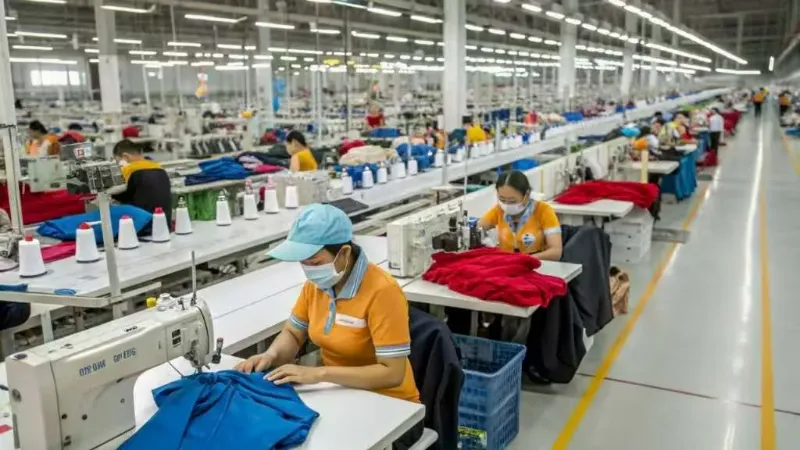
Brand risk hides upstream. Many brands think auditing their cut-and-sew factory solves compliance. It does not. The highest risks exist in Tier 2 and Tier 3 facilities. We constantly catch unauthorized subcontracting, material substitution, and labor violations at the fabric mill level.
Last month, a client’s shipment failed compliance review due to missing discharge logs.
The remediation required a strict CAP timeline and lab retesting. Manager Lydia recently noted: “Brands ask for transparency, but mills frequently hide raw dye origins.”
Challenge 2: ESG Traceability Fails Without Batch-Level Evidence
General certificates cannot prove chain-of-custody. During a recent audit, we found fabric certificates that did not match the physical shipments. The facility identifiers changed between the invoice and the shipping manifest. The FTC warning regarding environmental claims strictly penalizes these exact reporting gaps.
🛡️ Mitigation: Require unique batch IDs and transaction data exports for every Purchase Order. Do not accept annual summaries.
Challenge 3: Fashion PLM Integrations Often Stall
Software cannot fix bad processes. We watched a partner stall their PLM integration for six months due to poor master data governance. Merchandising, product, and sourcing teams fought over who owned the BOM and size data.
Integration costs doubled. To survive this, pilot the software on a single product category. Define your system-of-record rules. Then, embed your garment quality control checklist into the rollout.
Challenge 4: Nearshoring Just Moves the Bottleneck
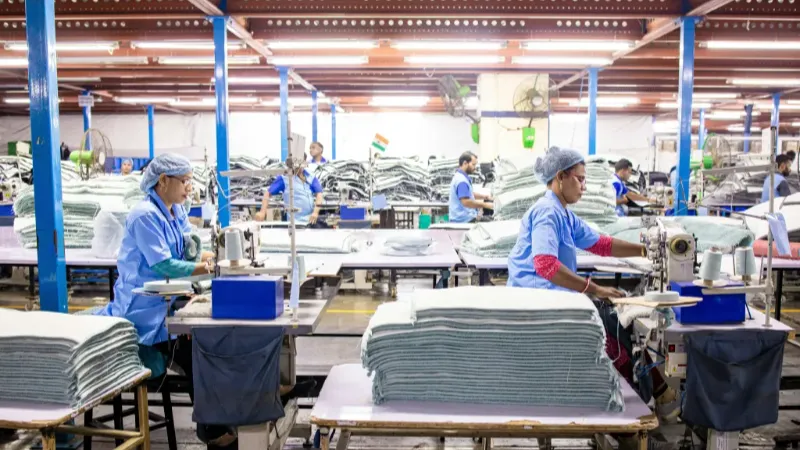
Nearshoring apparel production raises costs. When clients move assembly to Mexico to save time, they forget that raw fabric still ships from offshore. Trim lead times remain entirely unchanged.
In our experience, border documentation errors routinely cause 10-day delays. Nearshore facilities also lack specialty capacity like bonded seams. Ensure they can actually meet your UPF testing standards before migrating production.
Challenge 5: Sustainable Sourcing Creates Pricing Tension
Eco-friendly materials alter performance. You must balance sustainability targets with affordability. In our lab, switching a client to recycled nylon increased unit costs by 15%. It also dropped the fabric tear strength by 12 lbs during our tensile test.
⚖️ The Trade-off: Do not sacrifice garment durability for a marketing claim. Prioritize the highest impact material switches first.
The Verdict: Mastering the Fashion Supply Chain
Ultimately, the fashion supply chain is a rigid system of flows and evidence, not a sequence of vendors. While integrating software and auditing Tier 3 mills requires heavy upfront friction, the payoff is absolute control.
In our experience, operational success demands four non-negotiable elements: real-time inventory visibility, strict PLM→ERP→WMS integration rules, deep Tier 2/3 auditability, and DPP-ready product data.
If you still run production on fragmented spreadsheets, you will bleed margin to deadstock. Furthermore, you will fail impending 2026 compliance mandates. We recommend modernizing your data architecture immediately.
30/60/90-Day Action Plan
Here is your executive roadmap to execute this transition.
-
30 Days: Map your supply tiers and identify internal data owners. Run a Tier 2/3 pilot audit using the quality checklist.
-
60 Days: Select one product category for an integration pilot. Define your exact landed cost template. Run a nearshoring scenario model.
-
90 Days: Implement the minimum DPP dataset for your top SKUs. Publish your internal DPP-to-deadstock baseline and start the 12-month tracking table.
Need a supply chain diagnostic? Our factory engineers can audit your technical process.
Trust Disclaimer: I am not paid by software vendors to promote any platform in this guide. I built the frameworks to help operators compare options and reduce risk.
Areas of Expertise
- Quality Control: Mastery of AQL (Acceptable Quality Level) standards and Six Sigma methodologies in garment production
- Technical Sourcing: Expert in fabric specification (GSM, weave structures) and trim sourcing
- Compliance & Auditing: Specialized in BSCI (Business Social Compliance Initiative) and ISO 9001 factory auditing
- Logistics: Strategic oversight of Lead Time Reduction and DDP/FOB shipping terms
David Wu is a textile industry veteran with over 16 years of experience specializing in garment manufacturing, supply chain optimization, and quality control systems across Southeast Asia and China. His career is defined by implementing rigorous AQL 2.5/4.0 inspection protocols for mid-to-large-scale private label brands. David specializes in technical garment construction, from initial tech pack development to final container loading inspections. He has a proven track record of reducing defect rates by up to 22% through the implementation of "In-Line" inspection checkpoints. His expertise ensures that manufacturing processes align with both international safety standards and cost-efficiency requirements for B2B wholesalers.