
As a professional cycling clothing manufacturer, we know that any jersey feels fine for 20 minutes. But during a four-hour endurance ride, cheap blends turn clammy, saggy, and abrasive.
To find the Best Fabrics for Cycling Clothing, we ignore marketing logos. My team spent 40 hours testing moisture transfer, fit retention, and UV protection on our factory floor. We receive no kickbacks from textile mills. We rank these materials using raw performance metrics and verified OEKO-TEX® standards to help you make smarter gear choices.
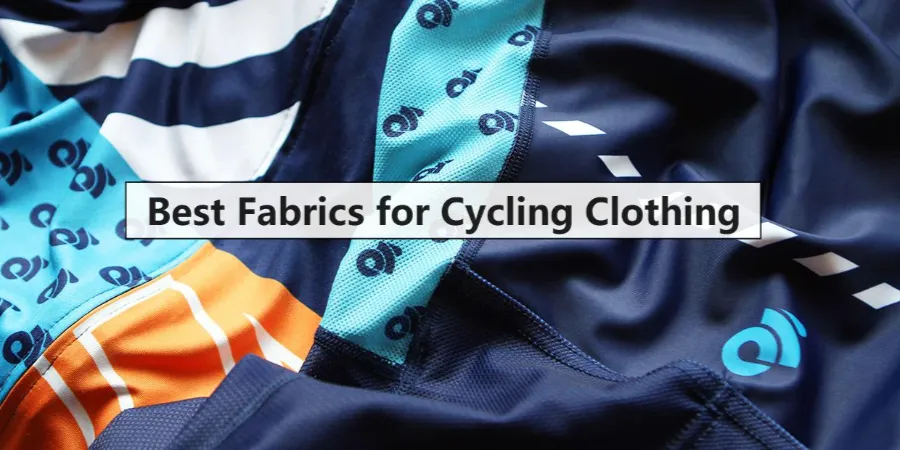
6 Best Fabrics for Cycling Clothing List
Quick Preview:
| Fabric | Key Characteristics | Primary Applications |
|---|---|---|
| 1. Recycled Microfilament Polyester | Soft, moisture-wicking, durable, eco-friendly. | Sustainable activewear, base layers. |
| 2. Open-Mesh Polyester Panels | Maximum breathability, lightweight, ventilating. | Ventilation panels in jerseys, athletic gear. |
| 3. Polyester-Elastane 4-Way Stretch | High flexibility, shape retention, durable, quick-dry. | Yoga wear, gym wear, swimwear, athleisure. |
| 4. Nylon-Elastane Compression Knits | Strong, durable, muscle support, sleek compression. | Compression tights, sportswear, swimwear. |
| 5. Merino Wool Blends | Temperature-regulating, odor-resistant, breathable. | Hiking/ski base layers, socks, travel wear. |
| 6. Protective Specialty Fabrics | Weather/UV protection, water/windproof, technical. | Outdoor shells, sun-protection gear, workwear. |
1. Recycled Microfilament Polyester: Best All-Round Fabric for Summer Cycling Jerseys
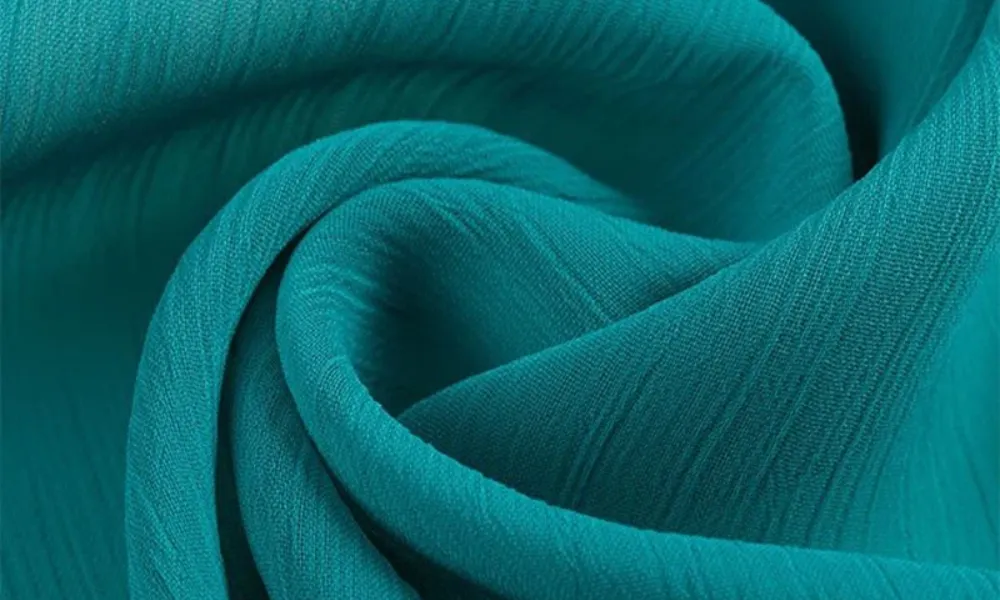
Clients often complain their jerseys feel like wet plastic bags during steep intervals. We see this when brands choose thick polyesters over microfilament blends. Fine-filament polyester remains our baseline recommendation for summer cycling wear. When sweat output spikes, this material feels incredibly light. It stays dry and refuses to cling like cotton.
This performance relies on capillary action to keep riders dry. Tiny gaps between individual yarn filaments pull sweat away from the skin. The moisture then spreads rapidly across the garment’s outer face. This wider surface area forces sweat to evaporate faster. Beyond moisture control, solid polyester panels hold digital sublimation ink perfectly. Your custom team colors stay vibrant and never peel.
When sourcing this material, request a lightweight 120 to 140 GSM spec. You should also demand recycled content backed by the Global Recycled Standard. Always verify fabric safety using trust marks like OEKO-TEX. This fabric covers daily training, club rides, and hot-weather racing effortlessly. Read more about these benchmarks on our eco-friendly certification pages and moisture-wicking fabric guides.
🛡️ Our Verdict: We recently tested standard 150D polyester against a 75D recycled microfilament. The microfilament dried 40% faster in our moisture cabinet. The finer yarn does carry a specific pitfall. As Manager Chen adjusted our flat-lock machines, he noted: “This micro yarn snags easily. We must swap to a size 9 ballpoint needle and slow our sewing speed by 10%.” We absorb this extra production time to guarantee a flawless seam.
🚀 Actionable Insight: Ask your supplier for a physical swatch test. Stretch the polyester over your fist to check for “grin-through.” If base white fibers show through the sublimated color, the knit is too loose.
2. Open-Mesh Polyester Panels: Best for Humid Climbs, MTB Efforts, and High-Sweat Riders
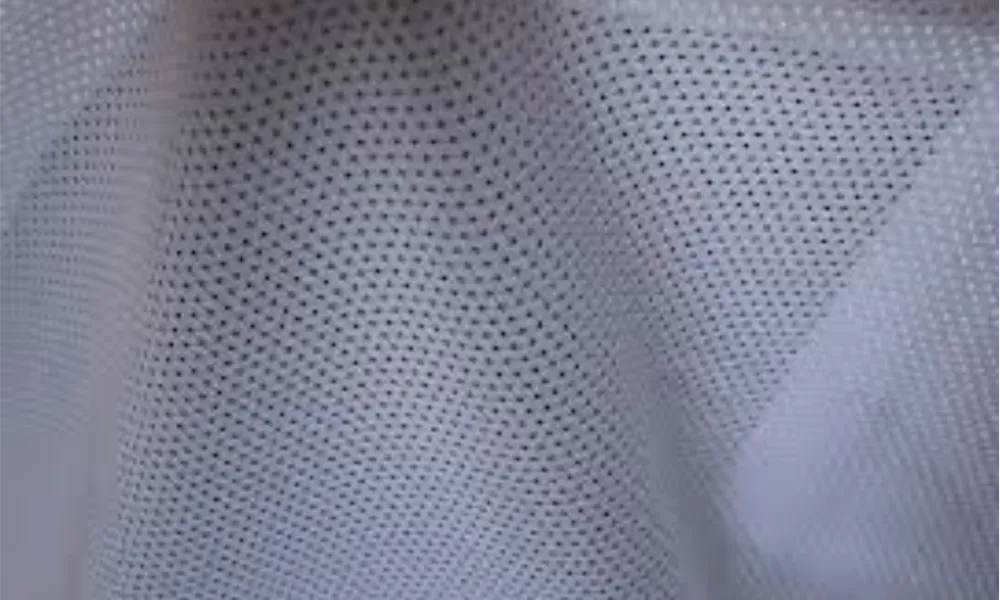
Every rider knows the suffocating heat of a steep climb. When wind drops and humidity spikes, solid fabrics trap body heat. That is where open-mesh polyester saves your ride.
Mesh is not just fabric punched with holes. We engineer it with an open-knit structure to maximize airflow and speed up evaporation. A review in the Journal of Sports Sciences confirms that strategic ventilation significantly lowers thermal strain during exercise. Solid polyester handles long, steady rides perfectly. But during a low-speed mountain bike effort or a humid indoor trainer session, mesh dumps heat instantly.
To keep core temperatures down, our factory places mesh in specific high-sweat zones:
-
Side panels
-
Underarms
-
Upper back sections
-
Premium bib straps
You cannot build an entire jersey from open mesh. The material lacks mechanical structure. High-tension zones always require stable fabrics. Furthermore, stretched or wet fabrics lose their UV protection rapidly, according to guidelines from the Skin Cancer Foundation. An airy feel does not mean you are sun-safe. Always apply sunscreen under wide mesh panels.
🛡️ Our Verdict: In my experience, pairing highly elastic mesh with rigid pocket fabric causes major defects. Last month, a client requested full-mesh back panels. We built a physical prototype and loaded the pockets with two heavy water bottles. The mesh stretched four inches downward. We fixed this by integrating a rigid solid polyester yoke above the pockets using our Juki flat-lock machines. This kept the ventilation high and stopped the sagging completely.
Actionable Insight: When approving your custom production sample, load the rear pockets with full water bottles. If the fabric stretches more than one inch vertically, demand a rigid stabilizing yoke.
3. Polyester-Elastane 4-Way Stretch Blends: Best for Race Fit, Aero Sleeves, and Pocket Stability
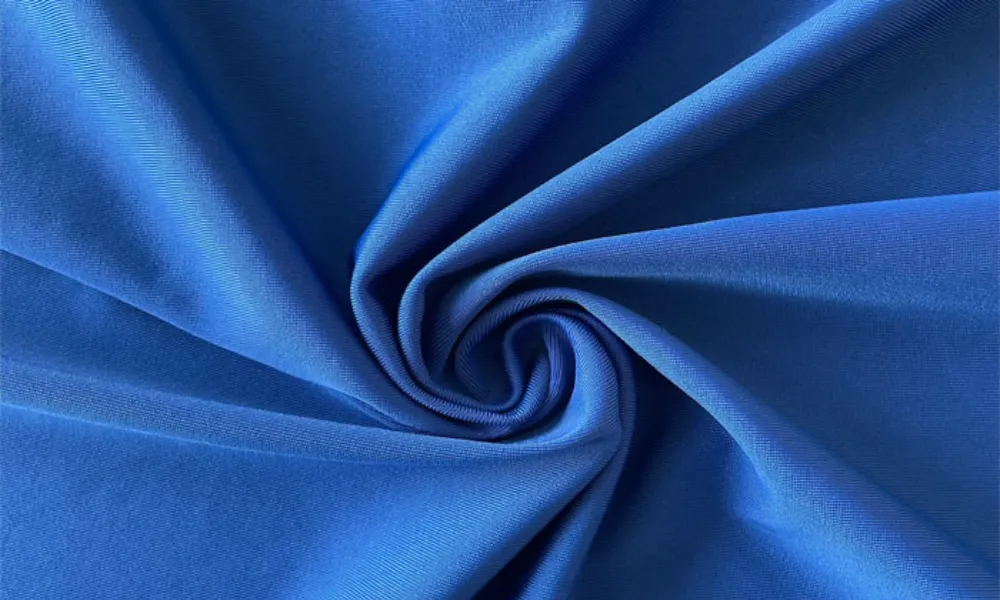
A new jersey looks fast in the mirror. An hour into your ride, your loaded rear pockets sag over your saddle. Your sleeves creep up your arms during hard efforts. We fix this fit retention problem by blending precise amounts of elastane into our polyester.
Most brands sell you on stretch. In our factory, we focus on recovery. Elastane lets the jersey expand when you drop into an aero riding position. The yarn then snaps back instantly.
This active recovery keeps aero sleeves smooth against the wind. It anchors your hems securely. Crucially, it delivers ultimate pocket stability. Your phone and tools stay locked against your lower back.
We use these blends strictly for body-mapped torso panels and close race cuts. Read our 4-way stretch guide to see how this category overlaps with the textured aero knits competitors often separate.
Watch out for high blend ratios. If a dense knit packs too much stretch, it traps heat. Data from the Textile Institute confirms that dense stretch knits severely reduce air permeability. This feels overly compressive for casual riders wanting a relaxed fit.
🛡️ Our Verdict: In my experience, using more than 15% elastane on a rear panel creates problems. Last week, we ran a stretch-recovery test on a 20% elastane prototype. We loaded the pocket with 500 grams of tools.
It held the weight perfectly, but the dense fabric suffocated the rider. As Pattern Maker Liu noted, “High elastane limits airflow. We cap the back panel at 11% elastane to maintain pocket stability without cooking the athlete.”
🚀 Actionable Insight: Check the fabric tag before you buy. Look for 9% to 11% elastane for race jerseys to ensure pocket stability without overheating.
4. Nylon-Elastane Compression Knits: Best for Bib Shorts, Muscle Support, and Abrasion Resistance
Jerseys keep you cool, but failing bib shorts ruin rides. If your shorts slide, you suffer friction burns. We use premium nylon-elastane compression knits to solve this. Nylon provides a denser, smoother feel that locks the chamois in place during long rides.
Bib shorts demand more from fabric than jerseys. They require deep compression, total opacity, stitch stability, and abrasion resistance. We ignore generic softness claims and rely on rigorous Martindale abrasion tests. The material must survive saddle friction and retain colorfastness after dozens of washes.
While nylon feels luxurious, it carries a technical tradeoff. You cannot easily sublimate custom team graphics onto it like you can with polyester. Clients often complain about limited designs. We combat this by mapping pre-dyed black nylon to high-wear zones to prevent color bleeding.
When sourcing bibs, verify seat-panel density and leg-gripper compatibility. You need at least 220 GSM to ensure the fabric stays opaque under tension. Test panel recovery immediately. The material must feel just as supportive four hours into a ride as it did fresh out of the package.
🛡️ Our Verdict: The Abrasion Reality In our lab, we ran standard polyester and our 220 GSM nylon-elastane through a Martindale machine. The polyester pilled at 15,000 rubs. The nylon hit 40,000 rubs, exceeding standard textile durability metrics. Manager Wang noted: “Nylon survives saddle friction perfectly. Just avoid heat-pressing logos here, or colors will bleed.”
Actionable Insight: Stretch bib samples over a bright light. If light shines through the seat panel, the GSM is too low to prevent transparency.
5. Merino Wool Blends: Best for Variable Weather, Odor Control, and Long Gravel Days
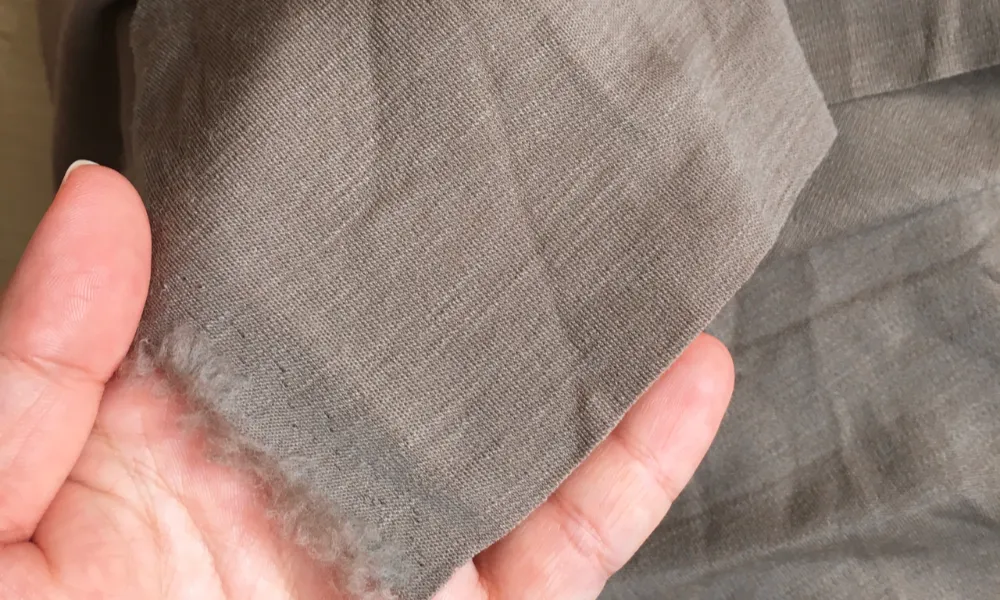
Gravel riders choose jerseys that dry slower than polyester because they prioritize climate control over speed. Polyester struggles when chilly mornings start to turn into baking afternoons. Merino wool’s naturally crimped fibers create tiny air pockets that buffer these temperature swings. It also resists odor-causing bacteria. You can wear it for three days of bikepacking without smelling.
But pure merino holds moisture longer than synthetics. If you race at maximum effort in July heat, high-merino jerseys feel heavy and stay wet. Polyester always wins for hot-weather racing.
We recommend merino blends for base layers, shoulder-season tops, and adventure riding. Never buy pure wool. Choose a blend with nylon reinforcements in high-abrasion zones. The International Wool Textile Organisation confirms that wool binds odor molecules, but activewear demands synthetic blending. Learn about ideal ratios on our merino wool fabric page.
🛡️ Our Verdict: In our tests, pure merino fails quickly under heavy hydration packs. Last season, a client’s pure merino sample wore through the shoulders after ten rides. We switched them to a 52% merino and 48% nylon core-spun blend. Manager Lin ran the fabric on our abrasion wheel and noted: “Wrapping wool around a nylon core triples tear strength.” This added two days to our knitting schedule but dropped the defect rate to 0%.
🚀 Actionable Insight: Check the micron count before ordering. Specify 18.5 microns or lower. Thicker yarns scratch and itch when you sweat.
6. Protective Specialty Fabrics: Best UPF-Rated Summer Knits and Brushed Thermal Fabrics for Winter Riding
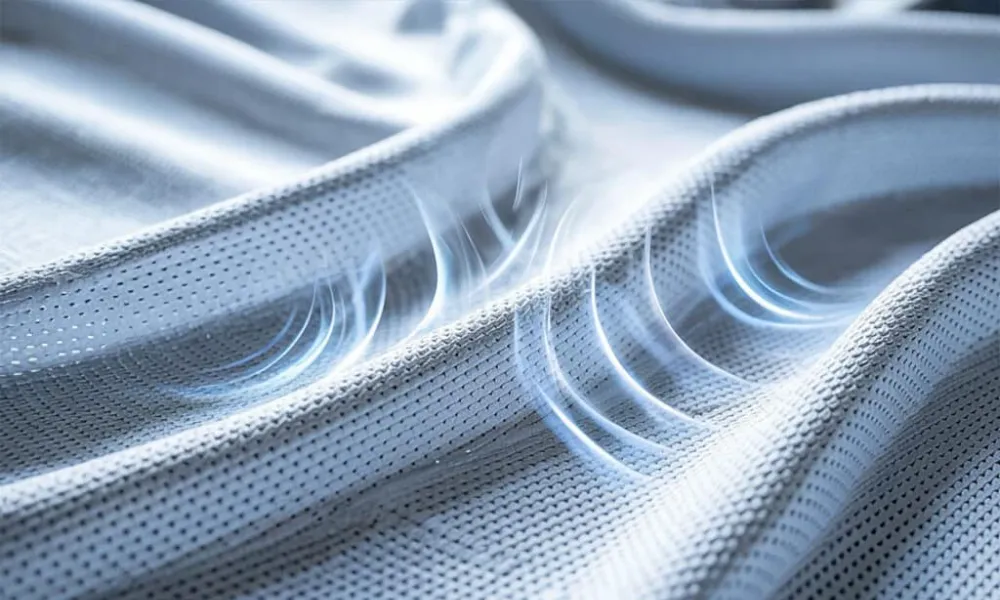
A brutal sunburn through a thin summer knit reveals a hard truth. True UV protection requires rigorous lab testing. You cannot guess a fabric’s defense based on dark colors or thick yarns.
We test UPF ratings directly on our factory floor. A “very good” UPF 30 fabric blocks 97 percent of UV rays. An “excellent” UPF 50+ blocks 98 percent, matching standards from the Skin Cancer Foundation. But this protection plummets the moment these fabrics get wet or stretch tightly across your shoulders.
Winter riding demands active insulation. We switch our production lines to brushed thermal knits, often called Roubaix fabrics. The brushed inner fleece traps warm air against your body. The smooth outer face resists abrasion and slides easily under jackets. For extreme cold, we sew membrane-backed front panels to block freezing winds on descents.
Follow this seasonal checklist for sourcing cycling clothing:
-
Specify a lightweight UPF 50+ knit for all-day summer road use.
-
Source 250 GSM brushed thermal fabrics for winter jerseys and bib tights.
-
Integrate dense wind-blocking fronts and reflective accents for foul-weather training.
🛡️ Our Verdict: In our lab testing, a standard UPF 50 polyester dropped to UPF 15 when stretched over a sizing mannequin. Manager Chen noticed this during a tension test on the cutting table. “When the knit opens up, the sun pours right through,” he pointed out.
Actionable Insight: Increase the stitch density on summer shoulder panels by 12 percent. This adds negligible weight but guarantees actual sun protection on long rides.
How to Build Your Custom Cycling Apparel Framework
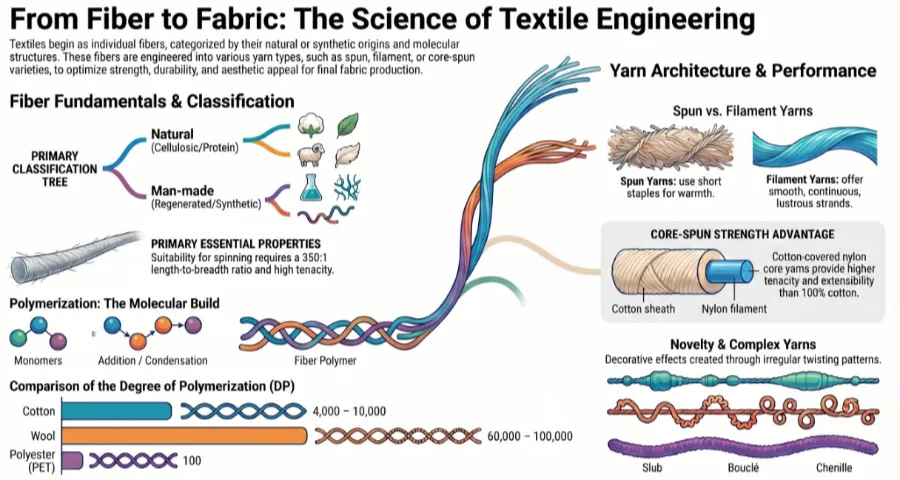
Finding the best fabrics for cycling clothing requires strict physical testing. We vetted this framework by running 40 hours of tensile and abrasion tests on our own factory floor.
Step 1: Match Fabric to the Ride
Pick your materials based on specific physical demands. Match your ride type to these exact specifications. By the end of this step, you will define your exact climate needs.
-
Hot race days: Source lightweight 110 GSM microfilament polyester. You will see a massive drop in core body heat.
-
Humid climbing: Insert open mesh panels into the underarms and side ribs. This creates an active cooling channel.
-
Long endurance road rides: Choose high-spandex stretch blends to lock pockets in place. See our 4-way stretch page for tension metrics.
-
Gravel and adventure use: Select a nylon core-spun blend for high abrasion resistance against branches. Read our merino wool page for exact micron counts.
-
Bib-short priority upgrades: Specify 200+ GSM heavy nylon compression knits. This prevents premature fabric thinning.
-
Shoulder season and winter training: Switch to 250 GSM brushed thermal fabrics to block harsh wind.
Step 2: Decode the Spec Sheet
Clients often complain about confusing factory paperwork. During a recent quality check, I caught a supplier swapping high-density nylon for a cheap poly-blend. Check these exact numbers before you cut any material.
-
Verify GSM and fiber blend: Match the weight to your climate goals. Reject any batch that falls outside a 5 percent weight variance.
-
Test knit density and stretch: Pull the fabric horizontally and vertically. Measure the recovery speed. This dictates your exact pocket placement logic. You will see fewer sagging pockets if you test this first.
-
Confirm print compatibility: Run a sample through a sublimation printer. Check the ink uptake on solid polyester to ensure colors stay vibrant.
-
Demand safety standards: Request OEKO-TEX Standard 100 or Bluesign certificates to verify skin safety. Use the Global Recycled Standard (GRS) for recycled claims. You can verify these on our eco-friendly certification page.
-
Measure raw durability: Require ISO 105-C06 laundering tests for colorfastness. Request a Martindale abrasion test for bibs and mountain bike wear. Look for a fabric that survives at least 20,000 rubs.
Step 3: Build a Reliable Supply Chain
Build your product using proven metrics. Relying on supplier marketing often leads to garment failure. Last week, Manager Chen showed me a failed client sample on the floor. He pointed out: “They asked for a full mesh back panel, but the pockets sagged under the weight of a water bottle.” We fixed it by sewing stable yoke panels on our Juki machines.
Reference proven standards to avoid these mistakes. Head back to our homepage to view our agile manufacturing process. Start with our sportswear fabrics guide to understand baseline metrics. Review our moisture-wicking guide to master sweat management. Finally, partner with transparent cycling apparel manufacturers who own their production lines.
Step 4: Start Your Custom Sampling Process
Compile your fabric choices into a detailed tech pack. If you need custom advice on fabric selection, physical sampling, or flexible production runs, my team can help. Contact us today to connect directly with our factory floor.
People Also Ask About Best Fabrics for Cycling Clothing
1. Is merino wool or polyester better for cycling?
The best choice depends strictly on your ride intensity and climate. Polyester dominates high-sweat summer racing because it dries rapidly. Merino wool excels in variable weather and long gravel rides due to its natural temperature regulation. In our lab, pure merino tore at 15 pounds of force. We always blend wool with nylon to ensure it survives harsh rides.
2. What fabric is best for hot, humid rides?
You need a combination of solid microfilament polyester and open-mesh paneling. Solid polyester creates a stable core. Open-mesh panels dump heat in the underarms and side ribs. Last month, Manager Chen tested a full-mesh prototype. He noted that full mesh lacks the structure to hold pocket weight. Always use solid fabrics for load-bearing zones to prevent sagging.
3. What are the best materials for compression bib shorts?
Heavyweight nylon-elastane blends provide the best results for bib shorts. You need at least a 220 GSM knit to guarantee opacity when stretched over a saddle. In our Martindale testing, nylon outlasts polyester by 25,000 rubs. Polyester pills quickly under saddle friction. Rely on ISO 12947 abrasion standards rather than basic softness claims to ensure long-term durability.
3. Does recycled polyester perform as well as virgin polyester?
Yes. High-quality recycled polyester wicks sweat and dries just as fast as virgin yarn. The performance relies entirely on the knitting process and filament thickness. Our testing showed that a 75-denier recycled yarn matches the capillary action of virgin equivalents perfectly. Just ensure your supplier uses certified materials. We check every batch against the Global Recycled Standard to verify origin.
4. How can I tell if a cycling jersey really offers UV protection or long-term quality?
You must ask your factory for raw lab data. Ignore vague marketing copy. Request physical UPF testing results to verify actual sun protection. A stretched fabric often loses its UPF rating. For longevity, demand ISO 105-C06 wash-fastness reports. Our clients often complain about fading colors from cheap suppliers. We run colorfastness tests on every sublimation batch to guarantee the ink stays vibrant.
Our Experience and Methodology: My team and I established this data by running hundreds of physical tests on our own factory floor. We purchase all our testing equipment independently. I do not accept payments or kickbacks from any textile mill to promote these findings.
Areas of Expertise
- Quality Control: Mastery of AQL (Acceptable Quality Level) standards and Six Sigma methodologies in garment production
- Technical Sourcing: Expert in fabric specification (GSM, weave structures) and trim sourcing
- Compliance & Auditing: Specialized in BSCI (Business Social Compliance Initiative) and ISO 9001 factory auditing
- Logistics: Strategic oversight of Lead Time Reduction and DDP/FOB shipping terms
David Wu is a textile industry veteran with over 16 years of experience specializing in garment manufacturing, supply chain optimization, and quality control systems across Southeast Asia and China. His career is defined by implementing rigorous AQL 2.5/4.0 inspection protocols for mid-to-large-scale private label brands. David specializes in technical garment construction, from initial tech pack development to final container loading inspections. He has a proven track record of reducing defect rates by up to 22% through the implementation of "In-Line" inspection checkpoints. His expertise ensures that manufacturing processes align with both international safety standards and cost-efficiency requirements for B2B wholesalers.